A busy vacation-rental season has a way of exposing weak furniture. A cleaning team reports a loose dining chair. A guest mentions a sagging sofa. A bunk room that looked great in listing photos feels cramped, noisy, or uncomfortable in person.
Each issue may seem small, but together they affect maintenance time, guest satisfaction, reviews, and repeat bookings. The best furniture for a short-term rental is not necessarily the least expensive item available. It is furniture that can withstand frequent use, clean up efficiently, remain comfortable, and continue looking good as guests come and go.
From Orange Beach and the Florida Panhandle to Florida’s Gulf Coast and Key West, vacation-rental furniture needs to work as hard as the property itself. Furniture is not just decoration. It is part of the home’s operating system.
Why inexpensive rental furniture can become expensive
Most owners do not experience the complete cost of a furniture purchase on delivery day. The larger cost appears later when a frame fails during a busy season, a bed begins to squeak, or a chair becomes unsafe and must be replaced on short notice.
Replacement involves more than the item itself. It may require delivery coordination, assembly, storage, a maintenance visit, and a blocked turnover window. It can also leave guests with a room that feels worn or incomplete.
Short-term rentals place furniture under very different conditions than a private home. Guests drag chairs, place luggage on tables, bring food and drinks into living areas, and use beds without knowing how they were assembled. Beach sand, sunscreen, wet clothing, pool gear, and frequent family use add to the challenge.
- Operations: weak furniture creates repair and replacement work.
- Guest experience: unstable or uncomfortable pieces make a property feel neglected.
- Marketing: worn furniture can make the actual stay fall short of the listing photos.
A better buying question is not simply, “What costs less today?” Ask which pieces will protect your calendar, maintenance budget, and guest experience for the longest time.
Five standards for rental-ready furniture
Furniture in a high-use vacation property should be durable, comfortable, easy to maintain, stable, and visually appropriate for the home.
1. Look beneath the upholstery
Style cannot compensate for a weak frame. For sofas, chairs, tables, beds, and bunk systems, look for substantial construction, reinforced joints, dependable hardware, and materials intended to withstand repeated use. Solid wood, reinforced plywood, and properly designed metal components are generally better choices than thin fasteners, particleboard, or lightweight knock-down construction.
A simple test is to sit on the edge, shift your weight, or gently push the piece. Furniture that flexes, rocks, or feels unstable in a showroom is unlikely to improve after months of rental use.
2. Treat comfort as a review issue
Guests may accept a simple design, but they remember an uncomfortable sofa or a bed that moves and squeaks. Sofas should support adults without bottoming out. Dining chairs should feel substantial enough for a full meal or game night. Beds need stable support with minimal movement transfer.
In bunk rooms, comfort also depends on usable headroom, ladder or stair access, rail placement, and the ease of getting into and out of each sleeping position.
3. Make cleaning predictable
Spills, food, sunscreen, wet swimwear, and sand are normal in Florida vacation rentals. Performance fabrics such as Sunbrella, Crypton, microfiber blends, commercial-grade polyester, Olefin, and polypropylene can be practical options depending on the piece and cleaning requirements.
For tables and case goods, smooth sealed wood, durable laminate, metal, and stone-like surfaces are often easier to wipe down than delicate or deeply textured finishes. Favor:
- Materials that resist stains and odors
- Finishes that do not highlight every fingerprint
- Removable or accessible components when appropriate
- Simple details that do not slow down cleaning crews
4. Stability and safety matter
Rental furniture is used by people with different habits, ages, and body types. Choose stable nightstands, rigid dining chairs, secure bed frames, and bunk systems that remain quiet and steady during ordinary movement. Avoid pieces with weak joints, tip-over risk, or unnecessary projections that can create problems in a guest room.
5. Choose a style that will age well
Durable furniture does not have to look institutional. Clean lines, neutral or coastal tones, natural textures, and restrained details can fit beach houses, condo rentals, family homes, and larger group properties. Lighter coastal finishes may suit a Gulf-front property, while warm wood tones can work well in a family vacation home.
The goal is furniture that photographs well today and still feels appropriate after repeated seasons—not a trend-driven package that becomes dated or difficult to maintain.
Room-by-room furniture priorities
Living rooms
Living areas receive constant use from families, groups, and children. Guests may bring luggage, food, drinks, beach bags, and wet gear into the room.
For sofas and lounge chairs, prioritize strong frames, cleanable upholstery, and cushions that recover their shape. Tight-back designs can be easier to maintain than overly loose cushions, although the best choice depends on the intended look and comfort level.
Coffee and side tables should resist moisture, heat, and impacts. Finished wood, stable metal-framed tables, and durable stone or engineered-stone surfaces can work well. Fragile glass-heavy designs may show fingerprints, chip at edges, or add risk without providing much operating value.
Dining areas
Dining furniture often serves as a meal table, workspace, game table, and staging area for luggage or beach equipment. The table should remain rigid when weight shifts across it, and each chair should sit flat without rocking.
Benches can be useful for family-friendly properties because they reduce visual clutter and accommodate flexible seating, provided they are properly built and sized. Pay close attention to leg-to-apron connections, chair backs, seat joints, and hardware—these are common points of movement and wear.
Bedrooms
Guests may not compliment a reliable bed frame, but they immediately notice squeaks, sway, and poor support. Look for substantial side rails, dependable center support, and a construction method suited to repeated use.
Nightstands should have wipeable tops for water, chargers, and personal items. Simple lighting, durable storage, and luggage benches can improve both guest convenience and turnover efficiency.
Entryways and bonus rooms
Entry areas are especially important in coastal rentals. A sturdy bench can help guests remove shoes and organize belongings, while hooks, shelves, and hard-wearing surfaces help keep sand and travel gear from spreading through the home.
In a bonus room, avoid novelty furniture that only looks good in photos. A useful piece should improve sleeping capacity, storage, comfort, or circulation.
Increase sleeping capacity with purpose-built solutions
Additional sleeping capacity can broaden the type of groups who consider a property. Families, reunions, wedding groups, and multi-family travelers often search by bed count and sleeping flexibility.
However, extra beds only add value when they are genuinely comfortable and practical. A sleeper sofa or futon may appear flexible, but it can make the living room less comfortable, require nightly conversion, and introduce additional mechanisms and maintenance points.
A dedicated bunk room is often a cleaner solution. It keeps sleeping space organized, gives guests a room designed for its purpose, and can become a meaningful feature in a vacation-rental listing.
Why adult-friendly bunk beds are different
Vacation-rental bunks should not be selected like occasional children’s furniture. Depending on the property and guest mix, bunks may be used by adults, teens, and children throughout the year. A system that feels temporary or underbuilt can develop noise, movement, sagging, and hardware problems.
Contract-grade and heavy-duty solid-wood bunk systems are designed for more demanding use. Guidance from rental-furnishing professionals commonly emphasizes substantial construction and higher weight ratings; some contract-grade systems are rated for up to 1,000 pounds per level. Always confirm the specifications, intended use, and safety requirements for the particular design.
For Florida vacation homes, bunk rooms may need to accommodate families sharing a beach rental, groups traveling together, or guests rotating through the property during a busy season. A stronger bunk system helps the room remain useful from one turnover to the next.
Dedicated bunks versus improvised beds
Scattered sofa beds, rollaways, and trundles can create a confusing guest experience. A planned bunk room is easier to describe in a listing, easier to photograph, and easier for guests to use without moving furniture every night.
Well-designed bunk systems also address common complaints:
- Frame movement and nighttime noise
- Uncomfortable or awkward ladder access
- Insufficient headroom
- Underbuilt slat systems
- Limited circulation around the beds
More beds are not automatically better. Sleeping capacity is valuable when guests can move around the room and rest comfortably.
Planning a functional vacation-rental bunk room
A successful bunk room is a layout decision, not simply a collection of beds. The configuration should account for the room’s dimensions, ceiling height, doors, windows, guest type, luggage, and turnover routine.
Select the configuration for the property
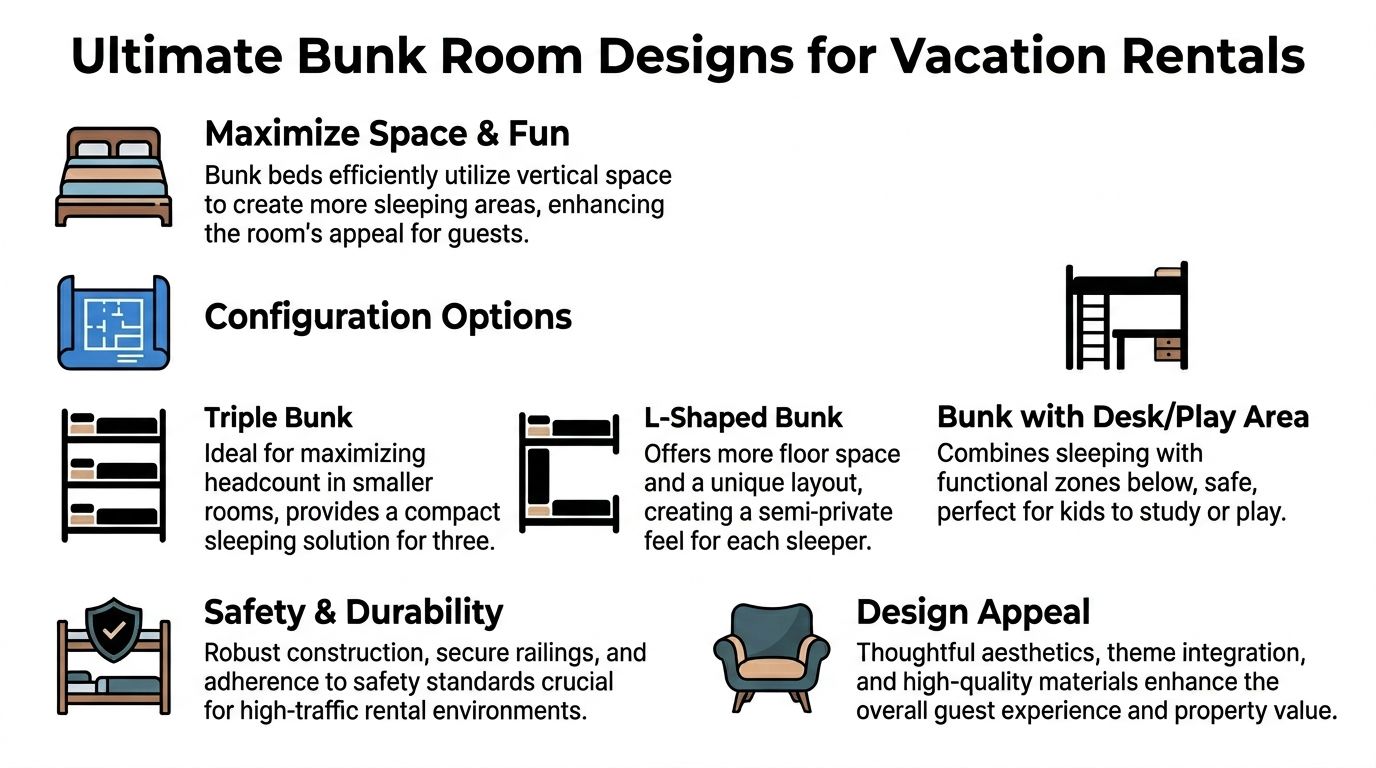
A triple bunk can add flexibility in a smaller room. A quad bunk may be appropriate for a larger family property or group-friendly rental. Single-wall, corner, alcove, and built-in-look arrangements can make better use of rooms with unusual dimensions or openings.
For a coastal home, a lighter finish and clean profile may integrate naturally with the surrounding design. In any market, the construction and layout should come before decorative details.
Protect headroom and circulation
Capacity should never be pursued at the expense of comfort. Guests need enough room to sit, turn, read, and enter each bunk without feeling confined. Before choosing a layout, consider:
- Whether an adult can sit comfortably in each sleeping position
- Whether ladder or stair access feels stable and intuitive
- Whether rails and access points interfere with movement
- Where guests will place bags, shoes, and personal items
- Whether the room still has a clear path during turnover
Ladders and stairs solve different problems
Ladders use less floor area and can be effective in compact rooms. Stairs require more space but may be easier to use and can provide drawers or side storage for clothing, linens, and travel gear.
The right choice depends on room dimensions, guest age range, ceiling height, and the desired balance between floor space and access. A bunk specialist can help compare options before the room is finalized.
How to choose furniture for your rental
Start with the way guests use the property rather than buying a matching furniture package. Identify the rooms that receive the most traffic, the surfaces most likely to get wet or stained, and the areas where additional sleeping capacity could improve the listing.
Then compare construction, maintenance requirements, access, comfort, and long-term fit. A practical rental setup may look simple, but it should be stronger in the places guests test without thinking about it.
Frequently asked questions
What type of furniture is best for a short-term rental?
Look for stable construction, cleanable materials, comfortable support, and a style that fits the property. Furniture should be selected for repeated guest use rather than occasional residential use.
Are performance fabrics worth considering in Florida vacation rentals?
They can be. Performance fabrics may help with spills, sunscreen, food, and wet clothing, but the correct choice depends on the specific fabric, care instructions, color, and cleaning process used by the property.
Are heavy-duty bunk beds useful for beach rentals?
They can be a practical way to add dedicated sleeping capacity for families and groups. The system should be sized and configured for the room, with appropriate access, headroom, rails, and support.
Should I choose bunk stairs or a ladder?
Ladders generally conserve floor space. Stairs can make access easier and may provide storage. The room layout and expected guests should determine the choice.
Can you help plan a bunk room layout?
Call or text Carson or Andy at 850-361-9988 to discuss your room, property, guest capacity, and preferred design. Florida Bunk Beds is a lead-generation catalog: browse designs, then contact us to request a quote.
Browse designs and request a quote
Whether you are furnishing a Gulf Coast condo, a Panhandle beach house, a family rental near Orlando, or a vacation property farther south, the right furniture should support the way guests actually use the home.
Browse our bunk bed designs, then call or text Carson or Andy at 850-361-9988 to discuss your project and request a quote.