When planning sleeping capacity for a Florida beach house — whether in Naples, Marco Island, Sarasota or elsewhere on the Gulf Coast — the choice between a queen-over-queen and a twin-over-queen bunk bed comes down to three things: who your guests are, what the room will physically allow, and how you want the room to perform financially. This guide lays out those tradeoffs clearly so you can pick the configuration that matches guest comfort, room footprint, and booking strategy.
Quick summary: when each option makes the most sense
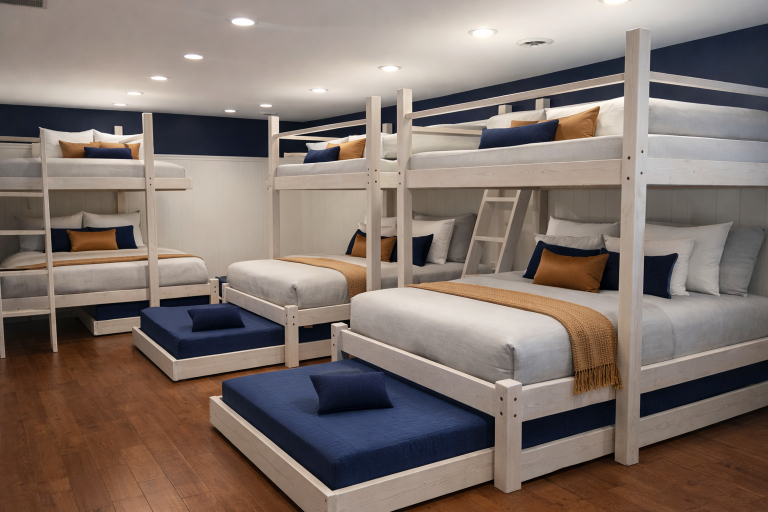
- Queen-over-queen: Best when you want two adult-friendly full-size sleeping surfaces in one room — ideal for couples, adults, or groups expecting multiple adult sleepers. Requires higher ceilings and a larger footprint but increases adult capacity and perceived value.
- Twin-over-queen: A flexible mixed-use layout: a queen below for adults and a twin above for a child or single adult. Fits in smaller rooms and lower ceilings compared with queen-over-queen, and is often easier to place under windows or in alcoves.
Guest types and comfort checklist
Match mattress layout to your typical guest mix:
- Couples or two adult pairs: Queen-over-queen provides two comfortable full-size mattresses — better for couple bookings, adult-only groups, or high-end listings where comfort is a selling point.
- Families with children: Twin-over-queen is often ideal because the twin on top suits kids and a queen below handles parents or older kids. It reduces the chance of adults sleeping on a twin mattress, which some guests find cramped.
- Mixed groups (adults + teens): Twin-over-queen offers flexibility. If teens are comfortable on a twin, you save space and can still accommodate adults on the queen below.
- Groups needing privacy: Queen-over-queen makes the room feel less dorm-like; both sleepers get queen-sized surfaces that can be dressed and staged like beds in separate rooms.
Room footprint & ceiling constraints
Coastal homes and condos often have variable ceiling heights and odd-shaped rooms. Use this checklist to judge fit before investing:
- Measure ceiling height: Queen-over-queen designs usually need higher clearances between floor and ceiling to allow a usable top mattress height and guardrails without feeling cramped. Twin-over-queen can often be used in rooms with lower ceilings because the top mattress is smaller and can sit lower.
- Check room width and depth: The same standard geometry is a useful starting point — certain designs are approximately 87″ wide × 87″ deep × 84″ tall — but custom designs should be measured and verified for each room.
- Window and egress placement: Ensure windows, closets, and doors remain functional. Queen-over-queen often needs more clearance from windows and mechanicals; twin-over-queen can sometimes be tucked into corners or alcoves more easily.
- Circulation and furniture: Consider bedside space, a luggage area, and a pathway for housekeeping. Bunks that block traffic or make cleaning harder can reduce nightly rates or guest satisfaction.
Revenue and listing tradeoffs
Think beyond capacity to how the room photographs and converts to bookings:
- Perceived value: Two queens signal higher comfort and can justify a higher nightly rate for couples or adult groups. If your market attracts family groups primarily, twin-over-queen can keep the room versatile and family-friendly while preserving space for other amenities.
- Occupancy flexibility: Twin-over-queen can increase total guests per property without requiring the room footprint and ceiling height of queen-over-queen, potentially increasing total revenue for family bookings or larger groups.
- Turnover and maintenance: Larger mattresses mean more bedding and often longer cleaning times. Built-in storage and stairs with drawers can speed turnover and improve guest impressions, offsetting the extra work.
When ceilings or footprints forbid queen-over-queen
If the room won’t comfortably fit two queen mattresses stacked, don’t force it. Poorly fitting bunks look cramped in photos and disappoint guests. In tighter rooms consider:
- Twin-over-queen or queen-with-trundle combos.
- Perpendicular or L-shaped bunk arrangements that use floor area differently.
- Custom built-ins that tuck the upper mattress into a ceiling recess or lower the structure while keeping headroom.
Practical checklist before you order
Before you get a quote or place an order, gather these items so a designer can give you accurate options:
- Room dimensions: length, width, ceiling height at the lowest and highest points.
- Photos: both ends of the room, windows, doors, closets, and any alcoves or built-ins.
- Sketch: approximate layout with door swing and furniture locations.
- Guest mix: typical bookings (couples, families, large groups?), and whether you prioritize adult comfort or maximum sleeping count.
- Desired features: stairs with storage, ladders, guardrail heights, under-bed drawers, or trundles.
Next steps: visualize, measure, and get a quote
Use visualization tools and professional guidance to avoid surprises. Florida Bunk Beds offers an online Bunk Bed Builder so you can upload photos and try configurations visually. When a queen-over-queen option is on the table, review specific designs on the queen bunk beds page. For mixed-use or family-focused layouts, see twin-over-queen details at Twin over Queen Bunk Beds.
Ready to move forward? Call or text Carson or Andy at 850-361-9988 to discuss your room, measurements, and quote. If you prefer, submit room photos and measurements through the request a bunk bed quote page and someone will follow up to walk you through options that suit your Florida Gulf Coast property.
Final thought
Queen-over-queen delivers higher adult comfort and higher perceived value when the room and ceiling allow it. Twin-over-queen offers flexibility, better fit in lower or smaller rooms, and often the best compromise for family-oriented rentals. Choose the one that matches your guest profile and room realities — and take measurements first so the final design fits cleanly and photographs well for your listing.