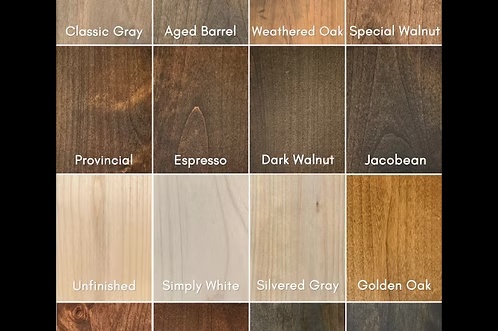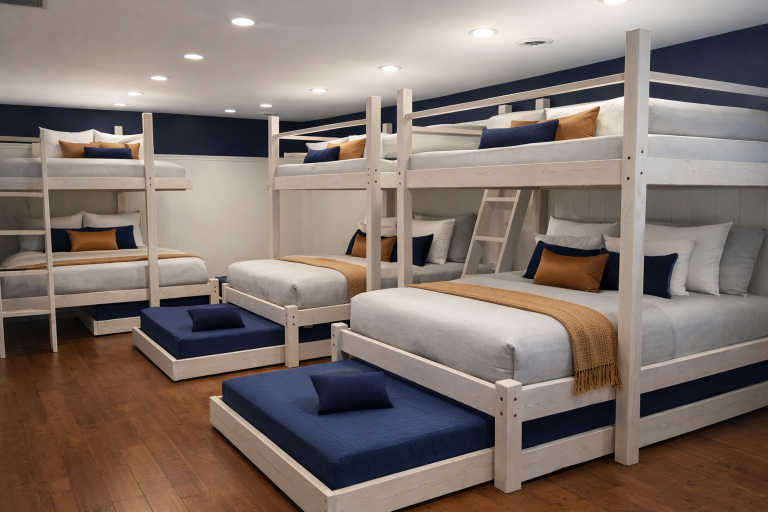
Designing a triple bunk room for a Key Largo or Key West vacation home means balancing looks with materials that tolerate high humidity and salty air. You don’t need industrial finishes to get a coastal look — you need choices that reduce swelling, corrosion, and maintenance while still photographing and living well for guests.
Start with a materials brief for your fabricator
Before estimating or approving finishes, give your builder a short specification that calls out three priorities: moisture control (materials that resist absorbing water), corrosion resistance (fasteners and metalwork that tolerate salt), and cleanability (finishes that wipe down easily between turnovers). Share photos, sketches, and room measurements so the fabricator can propose details that fit window locations, stairs or ladder placement, and mattress sizes.
Wood choices that behave better in humid coastal rooms
All wood moves with humidity. The practical approach is to choose materials and construction methods that reduce movement and make repairs or touch-ups simple.
- Engineered panels (marine-grade plywood or exterior-grade plywood): These panels are commonly used where solid lumber might cup or twist. They’re less prone to dimensional change than some solid boards when built with appropriate joinery and edge banding.
- Solid hardwoods in limited use: If you prefer the look of hardwood, specify narrower boards, properly acclimated stock, and sealed edges. Use solid wood for trim or visible faces and pair it with engineered panels for structural parts.
- Avoid moisture-sensitive MDF in exposed areas: MDF can swell if exposed to leaks or very high humidity. If you use it for trim or panels, insist on moisture-resistant grades and fully sealed edges.
Finish systems: paint, stain, or natural oil?
Your finish choice affects maintenance and the coastal style. Here are pragmatic options to discuss with your fabricator or finish contractor.
- Semi-gloss or satin paint on pre-sealed substrates: Smooth, mid- to high-sheen paint finishes are easiest to clean and resist staining from sunscreen and sand. Use a finish system that includes a sealer or primer suited for exterior-grade plywood or moisture-rated substrates.
- Waterborne urethane or conversion varnish topcoats: For stained or natural-wood looks, a clear protective topcoat adds water resistance and makes spot cleaning easier. Ask your fabricator what clear coats they specify for coastal interiors.
- Marine or exterior-rated clear coats for exposed edges: If parts of the bunk bed will be near windows or in open-air lanais, insist on a clear coat rated for exterior or marine use on exposed edges and undersides.
- Painted slatted fronts and drawers: Painted faces in durable finishes photograph well and hide repairs. Choose a finish with strong adhesion and scuff resistance to withstand frequent turnover in vacation rentals.
Hardware and fasteners: small parts that make a big difference
- Stainless steel or coated fasteners: Specify stainless steel screws and bolts or corrosion-resistant coatings for metal brackets. Corrosion of interior fasteners is one of the most common causes of unsightly staining and hardware failure in salt-air climates.
- Powder-coated metalwork: For ladders, rails, and decorative metal, powder coat finishes stand up better to salt than ordinary paint. Ask about salt-spray-rated coatings if the metal will be near the coast.
- Simple, serviceable connectors: Where possible, use hardware that can be tightened or replaced easily during routine maintenance without dismantling the bed.
Drawer boxes, storage, and under-bed components
Storage is one of the biggest value-adds for a triple bunk in a vacation rental. Keep these tips in mind:
- Use engineered panels for drawer boxes and seal all inside faces to keep humidity out of the core.
- Divide storage into removable bins or drawers that can be pulled out, wiped down, and dried between guest stays.
- Line drawer bottoms with moisture-resistant liners that can be replaced during turnover.
Cleaning-friendly paint and sealant notes
Frequent turnover in vacation rentals means finishes need to be easy to clean without degrading. Practical cleaning notes to discuss with your property manager and fabricator:
- Choose paints and topcoats that are compatible with mild, non-abrasive cleaners. Avoid unsealed surfaces that trap oils and stains.
- For spot cleaning, use pH-neutral soap and water or a diluted cleaner recommended by the finish manufacturer. Test on an inconspicuous area first.
- Avoid repeated use of hard bleaches directly on painted or clear-coated surfaces; ask your finisher which disinfectants are safe for their specified system.
Bedding, mattress protection, and ventilation
Materials aren’t the only consideration. How you dress and ventilate the bunks affects long-term appearance and guest comfort.
- Use mattress encasements and removable, washable mattress toppers to protect against moisture and stains.
- Choose bedding fabrics that dry quickly and tolerate frequent wash cycles; quick-dry sheets and covers reduce mildew risk in humid climates.
- Plan for room ventilation: a dehumidifier or HVAC settings that reduce indoor humidity will help both the finish and the mattresses.
What to ask your fabricator or finish contractor
Use this short checklist when you review quotes:
- Which grade of plywood or engineered panel are you proposing, and why?
- What primers, sealers, and topcoats will be used on visible and hidden surfaces?
- What fastener materials and metal finishes are specified for all exposed hardware?
- Can you provide a small finish sample or mock-up to inspect in the home’s actual humidity and light conditions?
Local considerations for the Florida Keys and Key West
When you’re building a triple bunk for a Key Largo, Islamorada, or Key West property, explicitly call out “salt-air exposure” in your specs. That prompts the fabricator to choose corrosion-resistant hardware and to recommend clear-coat options for exposed edges or sun-facing faces.
Next steps
If you’re planning a triple bunk room and want help translating design into a buildable plan, try the Bunk Bed Builder to visualize layouts and upload photos of your room. For beds that include storage, see our bunk beds with storage page for ideas on drawers and under-bed access. And if you’re in the islands, our Florida Keys bunk beds service-area page explains how we approach coastal projects.
Call or text Carson or Andy at 850-361-9988 to discuss your room, measurements, bunk-bed configuration, and a quote. Bring photos, sketches, and any humidity or HVAC notes — those details help us recommend the right materials and finishes for your Florida Keys triple bunk.