A vacation-rental bunk room needs to look inviting in listing photos and perform reliably between guest stays. Bedding must fit the mattress correctly, protect the bed from spills and sunscreen, tolerate repeated washing, and remain comfortable in warm or humid coastal properties. Housekeeping also needs to remake each bunk quickly without fighting bulky layers around ladders, stairs, and guardrails.
The most dependable approach starts with a durable mattress-compatible base, washable protection, simple coordinated styling, and a clear linen inventory. That applies to a family beach house, an Airbnb bunk room, an adult bunk suite, or a high-occupancy rental from Orange Beach and the Florida Panhandle to the Gulf Coast and Key West.
A custom bunk bed can make the bedding plan easier to manage. The design can account for room dimensions, ceiling height, storage, mattress sizes, ladder access, and clearance. A built-in-look bunk system may also provide a more finished appearance than forcing a standard retail bed into an unusual room.
1. Choose breathable coastal fabrics
Warm-weather rentals benefit from sheets and covers that feel light against the skin and stand up to frequent laundering. Linen blends, cotton percale, and well-designed performance fabrics can all work well when their care requirements match the property’s turnover schedule.
White, sand, soft blue, gray, and muted navy create a relaxed coastal palette that is easy to photograph and simple to standardize. Use the same base linens on every bunk, then add character with a restrained stripe, woven texture, or washable accent.
Build the bed from the mattress outward
- Confirm the mattress length, width, and pocket depth.
- Place a fitted mattress protector beneath the fitted sheet.
- Use a lightweight comforter or duvet that will not bunch against the upper rail.
- Consider pillow protectors in shared sleeping spaces.
- Keep backup sets labeled by exact size and bunk location.
For triple and quad bunk rooms, inventory planning matters as much as the fabric. A twin XL sheet should never be substituted for a standard twin during a rushed turnover.
2. Build a washable, allergy-conscious bedding system
Different families and guests use the same rental bunk room throughout the year. Washable mattress protectors, pillow protectors, breathable sheets, and clearly documented materials can help the room feel fresher, particularly in compact or humid spaces.
Terms such as “antimicrobial” should not replace routine laundering, moisture control, and prompt drying. If a product carries a certification such as OEKO-TEX or another recognized materials certification, review what the certification covers and follow the care label rather than assuming every item can be washed the same way.
- Protected mattresses: Select fitted protectors that remain smooth without adding unnecessary height.
- Washable pillows: Use pillows that can be cleaned or replaced while keeping the room consistent.
- Breathable layers: Avoid plastic-feeling or moisture-trapping covers.
- Documented care: Give housekeeping simple washing and drying instructions.
No treatment makes a mattress maintenance-free. Specialty finishes may also lose effectiveness with heavy washing, so use them as one part of a repeatable cleaning program.
3. Use coordinated layers without creating housekeeping clutter
Layered bedding can turn a functional bunk wall into a polished design feature. The practical version uses matching fitted sheets, coordinated duvet covers, and one or two washable accents. Too many pillows, loose throws, or decorative blankets add labor and can interfere with ladders and guardrails.
Keep the visible formula consistent:
- Base layer: Mattress protector and fitted sheet on every bunk.
- Sleep layer: Lightweight duvet or comforter folded the same way.
- Accent layer: One washable throw, sham, or narrow textured piece.
- Storage layer: A labeled location for spare and seasonal textiles.
Identical bedding on each level is especially effective in triple bunks, quad bunks, and queen-over-queen layouts. If variation is desired, change only the accent layer. The finished room should be easy for housekeeping to reproduce and realistic compared with the listing photographs.
4. Put waterproof protection under the visible bedding
A fitted waterproof protector helps shield the mattress from spills, sweat, sunscreen, and accidents while keeping the guest-facing sheet comfortable. It should fit closely without creating a raised edge, an unstable sleeping surface, excessive noise, or excessive heat.
Fitted sheets and pillowcases receive the most direct contact and usually deserve priority when selecting durable or stain-resistant components. A washable duvet cover is generally more practical than relying on a treated comforter alone.
A simple housekeeping response plan
- Blot spills promptly before they set.
- Follow the manufacturer’s water-temperature and detergent instructions.
- Inspect elastic, seams, and fitted corners after repeated washing.
- Record replacements so recurring problems can be identified by bunk.
Mattress height and bedding thickness are also safety considerations. The U.S. Consumer Product Safety Commission states that the upper guardrail must extend at least 5 inches above the top surface of the mattress when the thickest manufacturer-recommended mattress and foundation are used. Avoid bulky toppers or unusually thick layers on an upper bunk unless the bed specifications allow them.
5. Plan for cooling and temperature control
Florida bunk rooms can feel warmer than standard bedrooms, especially on upper levels where warm air collects. Breathable sheets, moisture-wicking fabrics, lightweight blankets, and alternative-fill comforters can improve comfort, but bedding does not replace air-conditioning, ventilation, or a properly located fan.
A practical warm-weather setup may include breathable fitted sheets, a lightweight washable comforter, ventilated pillows, and a clearly stored alternate layer for guests who prefer more coverage. Test the bedding in the actual room before standardizing it across every bunk. Ceiling height, fan placement, air-conditioning coverage, and the number of sleepers all affect how the room feels.
Specialty cooling materials may cost more and require more careful care. For many vacation rentals, simple breathable bedding that is easy to replace is a more dependable operating choice.
6. Consider durable, responsibly sourced materials
Organic cotton, linen, bamboo viscose, and recycled fibers may support a property’s design goals, but the label alone should not determine the purchase. Review specific certifications, care requirements, expected durability, and availability before creating a linen package.
In a heavily used rental, sustainability also means reducing premature replacement. A durable core of standardized sheets, washable protectors, breathable layers, and repairable accents can be more useful than a collection of fragile specialty products.
Custom bunk planning supports this approach by creating standardized sleeping positions, accessible storage, and a predictable linen plan. Accurate material claims and efficient inventory practices are more useful than broad, unsupported “eco-friendly” language.
7. Create a modular bedding inventory
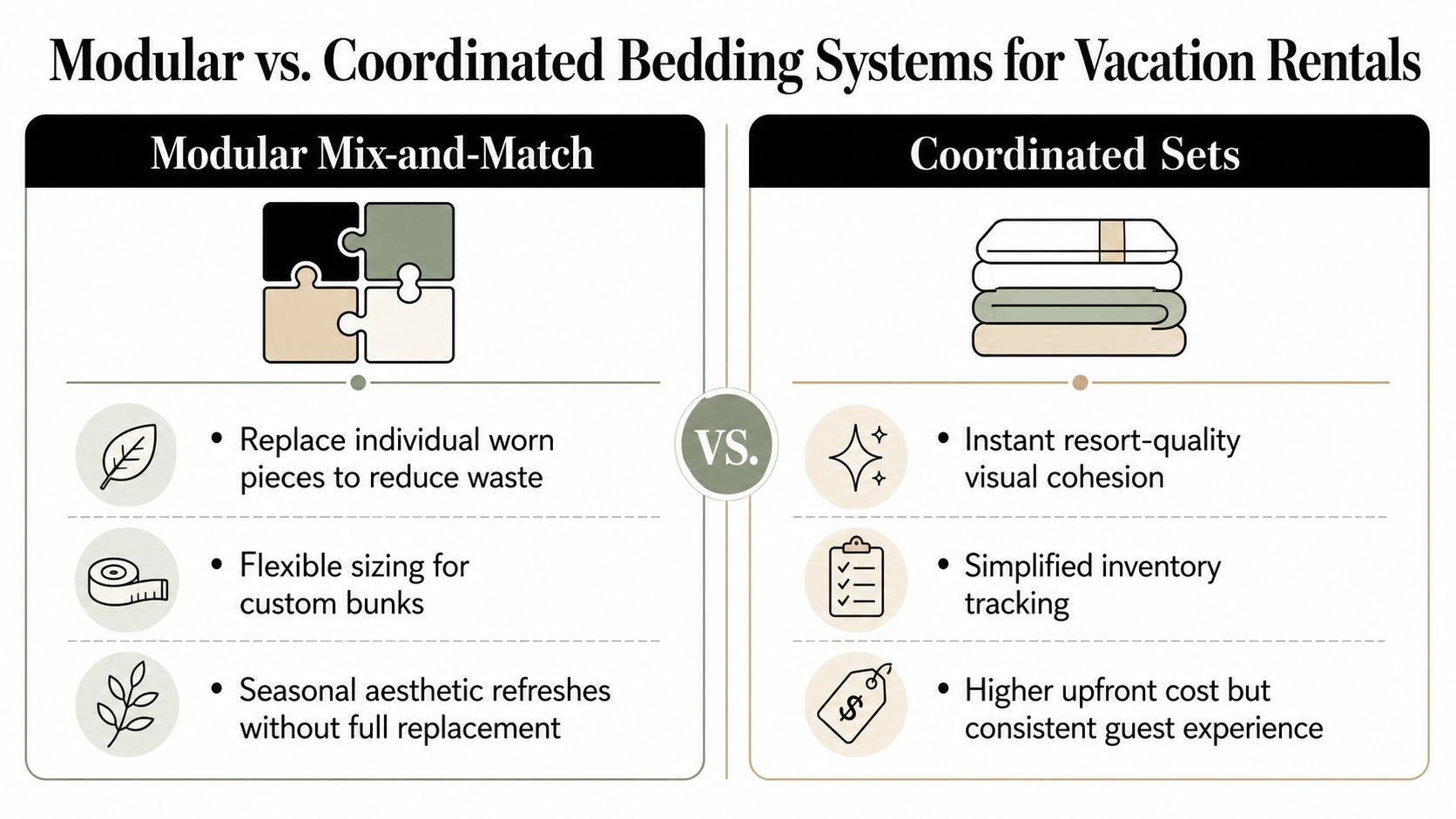
A modular system separates operational pieces from decorative pieces. Protectors, fitted sheets, and pillowcases form the consistent core. Duvet covers, throws, shams, and accent quilts can change seasonally or vary by property without replacing the entire package.
Start with a complete mattress-size map
Common mattress dimensions include twin at 38 by 75 inches, twin XL at 38 by 80 inches, full at 54 by 75 inches, full XL at 54 by 80 inches, and queen at 60 by 80 inches. Custom or built-in-look bunks may use a different configuration, so measure the actual mattress and confirm the intended specifications before ordering linens.
Label each set with:
- Exact mattress size and pocket depth
- Property and room assignment
- Bunk location
- Layer type, such as protector, sheet, cover, or accent
- Seasonal use, if applicable
A small, controlled palette—such as white and sand with navy accents—allows compatible pieces to move between rooms while preserving a deliberate appearance. The bed layout should be reviewed alongside the linen plan because rails, stairs, ladders, and storage affect how easily each sleeping position can be made.
8. Offer optional wellness bedding carefully
Weighted blankets and adjustable-fill pillows may appeal to guests seeking additional comfort, but they require more caution in a bunk room. A weighted blanket can be bulky on an upper bunk and may interfere with ladder access, guardrails, or a guest’s ability to move comfortably.
For most rentals, keep a lightweight standard comforter as the primary layer and store any optional weighted blanket in a clearly labeled location. Check the following before adding one:
- Whether the item is appropriate for the specific bunk position
- Whether it can be removed without obstructing access
- Whether guest instructions and care instructions are clear
- Whether a conventional lightweight option remains available
A low-profile mattress setup is a sensible starting point for upper bunks. Common bunk-bed guidance often discusses mattresses in the 6- to 8-inch range, but the correct limit depends on the bed design and manufacturer specifications. Confirm the actual requirements rather than adding plush toppers that reduce guardrail coverage or ceiling clearance.
Quick comparison of the eight approaches
| Bedding approach | Best fit | Main advantage | Watch for |
|---|---|---|---|
| Coastal linen or performance fabric | Beach homes and humid rentals | Light feel and practical styling | Care requirements and mattress fit |
| Hypoallergenic system | Shared or compact bunk rooms | Repeatable cleaning routine | Claims do not replace laundering |
| Coordinated layers | Listing-focused interiors | Finished, consistent appearance | Extra pieces add turnover work |
| Waterproof protection | High-occupancy rentals | Helps protect mattresses | Heat, noise, and added thickness |
| Cooling bedding | Florida summer use | Better warm-room comfort | Does not replace climate control |
| Responsible materials | Eco-conscious properties | Durable, intentional purchasing | Verify certifications and longevity |
| Modular inventory | Multiple properties or rooms | Easier replacement and storage | Requires accurate labeling |
| Optional wellness layers | Premium or adult bunk rooms | Guest comfort flexibility | Bulk and access on upper bunks |
Frequently asked questions
What bedding works best for a Florida vacation rental bunk room?
A durable, breathable fitted sheet over a correctly sized mattress protector is a practical foundation. Add a lightweight washable comforter or duvet cover and keep decorative layers limited so the room remains comfortable and easy to reset.
Should I use waterproof protectors on upper bunks?
Protection can be useful on any bunk, but confirm that the protector does not add excessive height, create an unstable surface, or reduce required guardrail coverage. Follow the bed and mattress specifications.
How do I know which sheets to order?
Measure each mattress and confirm whether it is twin, twin XL, full, full XL, queen, or another specified size. Pocket depth matters just as much as length and width, especially with custom bunk configurations.
Are cooling sheets enough for a humid coastal property?
No. They may improve the feel of the bed, but ventilation, air-conditioning coverage, fan placement, and room occupancy also affect comfort.
Can custom bunk beds use standard bedding?
Often, yes, when the sleeping positions are designed around available mattress and linen sizes. Reviewing the bedding plan before construction or ordering helps avoid hard-to-source dimensions.
Plan a rental-ready bunk room
Start by browsing bunk designs, then review the room dimensions, intended mattress sizes, ceiling height, access points, storage needs, and bedding strategy. Carson or Andy can discuss the configuration and help determine the information needed for a quote for a Florida or Gulf Coast vacation property.
Call or text 850-361-9988 to talk through your bunk room plans.