Turnover day at a coastal vacation rental can reveal a storage problem quickly: duffel bags in the corners, spare sheets in the closet, beach gear by the door, and no convenient place for guests to put their belongings. A bed with storage underneath can recover valuable space without adding another large piece of furniture—but the storage system has to fit the room, mattress, climate, and way the property is used.
FloridaBunkBeds.com serves vacation-home owners, families, and rental managers from Orange Beach and the Florida Panhandle along the Gulf Coast to Key West. We help you compare drawer storage, lift-up platforms, rolling trundles, and built-in compartments before you request a quote from Carson or Andy at 850-361-9988.
Why under-bed storage is useful in coastal rentals
Bedrooms in beach homes and vacation condos often need to accommodate more than sleeping. Guests arrive with luggage, towels, clothing, chargers, toys, and outdoor equipment. Owners also need practical places for spare bedding and supplies between turnovers. A storage bed uses the volume beneath the mattress while preserving walking space for other furniture.
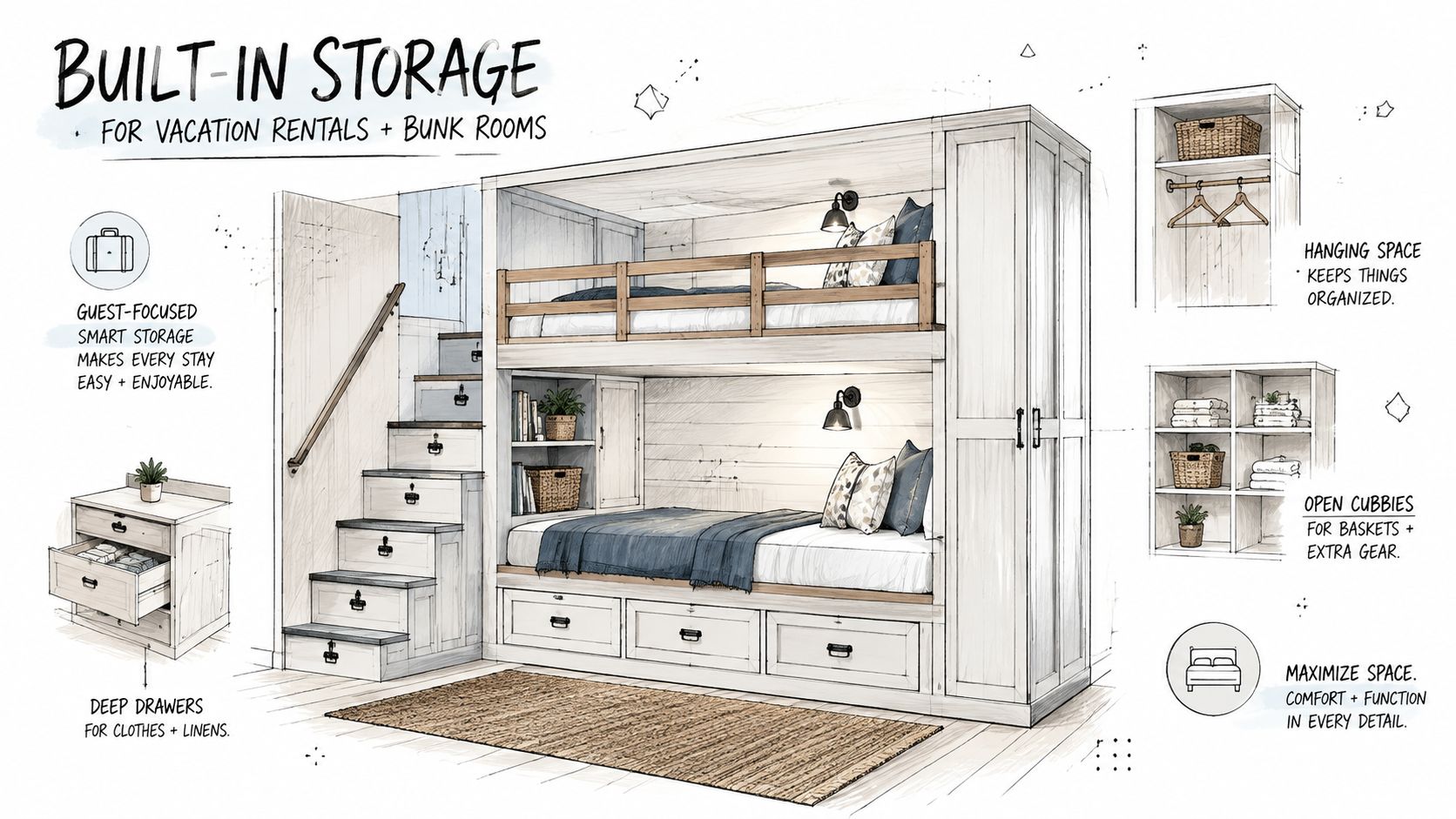
Storage is especially valuable in bunk rooms. Instead of leaving bags and loose belongings on the floor, a coordinated bunk design can include drawers, shelves, storage stairs, trundles, or fixed compartments. The result is a room that is easier for guests to understand and easier for cleaners to reset.
Four under-bed storage systems to compare
The best system depends on how often the contents will be accessed, how much floor clearance is available, and whether the bed needs to provide additional sleeping capacity.
Drawer storage
Drawers are a practical choice for sheets, towels, clothing, books, and other items that need regular access. They can be placed along one or both sides of the bed or incorporated into the footboard. A drawer arrangement such as two drawers on each side can provide useful organization without requiring the mattress to be lifted.
Allow roughly 12 to 18 inches of usable space in front of the drawer face, depending on the drawer design. Check that nightstands, walls, adjacent beds, luggage, and doors will not block the opening. Smooth, reasonably level flooring is also important; thick carpet or uneven surfaces can make rolling drawers more difficult.
Lift-up or ottoman storage
A lift-up platform exposes one large cavity beneath the mattress. This is useful for bulky comforters, pillows, seasonal bedding, or supplies that are accessed occasionally. It makes efficient use of the entire footprint rather than dividing the space into separate drawers.
The platform needs a clear lifting path, dependable assisted hardware, and a compatible mattress. Because the entire mattress platform must be raised to retrieve one item, lift-up storage is often better suited to a primary bedroom or occasional-use storage than to a busy rental bunk room.
Rolling trundles
A trundle can hold a second mattress or function as a large storage drawer. A sleeping trundle is helpful in children’s rooms, family vacation homes, and bunk rooms where the number of guests may change from booking to booking.
Plan for enough open floor space to pull the trundle out, walk around it, and return it without hitting a wall or another bed. A storage trundle is useful for bedding and supplies, but it becomes less practical if guests or cleaners cannot fully extend it.
Raised platforms and built-in compartments
A fixed platform can include cubbies, hinged sections, drawer banks, or cabinet-style compartments. This approach works particularly well when the storage is being coordinated with custom bunk beds, stairs, lighting, shelving, or a wall-to-wall room layout.
Built-in storage offers strong visual control and can be designed around the actual ceiling height, doors, wall angles, mattress dimensions, and circulation path. Its trade-off is permanence: it is not as easy to relocate or reconfigure as a freestanding bed or rolling bin.
Storage bed types at a glance
| Storage type | Best suited for | Important planning point |
|---|---|---|
| Drawers | Linens, clothing, and frequent-use items | Requires clear access in front of the drawer |
| Lift-up platform | Bulky or occasional-use belongings | Needs compatible hardware, mattress, and lifting clearance |
| Sleeping trundle | Children’s rooms and flexible guest capacity | Requires open floor space for deployment |
| Storage trundle | Bedding, toys, and rental supplies | Must be accessible without moving other furniture |
| Fixed compartments | Custom bunk rooms and integrated furniture | Offers a finished appearance but is less mobile |
Measure finished height and clearance—not just the mattress
Storage capacity is determined by the finished distance from the floor to the underside of the frame or platform. Measure after flooring, rugs, trim, and the completed bed base are in place. The mattress and box spring do not automatically create usable storage clearance.
As a practical starting point, select a container no taller than the floor-to-frame measurement minus approximately one inch. Lower platforms may accommodate flat bins, while taller platforms can allow drawers or a trundle. The exact opening, wheel, lid, and trim details still need to be checked.
Raising the bed creates more storage volume but also raises the mattress. That can affect comfort for children, older adults, and guests with mobility limitations. In a bunk room, finished mattress height also affects upper-bunk guardrail protection, access, and the effort required to make the bed.
Inspect the whole room before selecting the system
- Confirm drawer extension and trundle rollout areas.
- Check closet doors, bedroom doors, nightstands, and walking routes.
- Allow a clear opening path above a lift-up platform.
- For bunk beds, review ceiling height, ladder or stair placement, guardrails, and bed-making access.
- Keep storage from creating climbable surfaces or obstructing bunk access.
For bunk safety, the space between the mattress, frame, and guardrail should be carefully controlled; a commonly used maximum gap is 3.5 inches. The final design should account for the actual mattress thickness and the completed bunk construction.
Materials and finishes for Florida humidity and salt air
Storage beds have more working parts than simple platforms. Drawers use runners, lift-up beds use hinges and assisted hardware, and trundles repeatedly contact the floor. Material selection should reflect the room’s moisture exposure and the amount of use expected in a vacation rental.
- Solid wood: substantial and repairable, with a warm appearance. It can respond to humidity changes and adds weight.
- Plywood: useful for strong, stable casework and drawer boxes when properly finished.
- MDF: provides smooth painted panels, but exposed edges must be protected from water and impact.
- Metal: can provide a clean modern profile, but exposed hardware needs appropriate corrosion and noise control in coastal conditions.
For a Gulf Coast or Florida property, specify sealed wood surfaces, protected fasteners, and finishes appropriate for humid environments. No finish eliminates maintenance. Wipe away salt and dust, inspect runners and fasteners, and watch for swelling near floor-level components.
Do not place wet towels, damp swimwear, or wet beach equipment directly into enclosed storage. Let those items dry first, or use washable containers intended for the job.
Mattress airflow matters in a coastal climate
Enclosed storage can reduce air movement beneath a mattress. In a warm, humid room, a sealed and overfilled cavity may contribute to trapped moisture and odors. Slatted support, ventilation openings, and breathable storage containers can help maintain circulation.
Choose the mattress and foundation before finalizing the storage bed. The mattress must fit the platform, clear the drawer or compartment design, and remain within the intended height for any bunk. Keep room humidity under control when possible, and air or rotate the mattress as part of routine property maintenance.
More storage is not always better. If every cavity is packed tightly, access and airflow suffer. A practical design leaves room to use the storage, clean it, and inspect it.
Storage features that work well in vacation-rental bunk rooms
A successful bunk room is usually planned as one system rather than assembled from unrelated beds and bins. Depending on the room, useful features may include:
- Drawers beneath lower bunks for folded linens and clothing.
- Storage stairs that provide a more comfortable route to an upper bunk while using the stair volume.
- Trundles for flexible sleeping capacity.
- Shelves, charging areas, or integrated lighting for small belongings.
- Fixed compartments for less frequently used bedding and supplies.
- Painted panels, wood finishes, or other details coordinated with the coastal interior.
Custom construction is useful when a room has low ceilings, unusual wall angles, limited circulation, or a need to coordinate beds with stairs and storage. The goal is not simply to add the largest possible cavity. It is to create a durable, understandable room that guests can use and cleaners can reset efficiently.
When does under-bed storage justify the investment?
Storage under the bed is most valuable when it replaces a dresser, reduces floor clutter, adds a second sleeping surface, or makes a high-use rental room easier to maintain. The largest storage cavity is not automatically the best value if it is difficult to access, blocks ventilation, or requires guests to move other furniture.
Start by identifying what the storage must hold: guest luggage, spare bedding, towels, toys, clothing, or an additional mattress. Then compare access, clearance, durability, and finished bed height. That information makes a quote more useful than choosing solely by advertised volume.
Frequently asked questions
Are drawers or lift-up storage better for a vacation rental?
Drawers are generally easier for guests and cleaners to access repeatedly. Lift-up storage offers a larger uninterrupted cavity and may be preferable for occasional-use bedding or bulky items. The room layout and turnover routine should determine the choice.
Can storage underneath a bunk bed hold a mattress?
Yes, when the design is built as a sleeping trundle and the finished clearances allow it. A storage drawer and a sleeping trundle are different systems, so the mattress dimensions, floor clearance, and rollout space should be established before construction.
How much clearance do drawers need?
A useful planning allowance is approximately 12 to 18 inches in front of the drawer face, with additional attention to side access and nearby furniture. The exact requirement depends on the drawer depth, hardware, and room layout.
Is under-bed storage appropriate for humid Florida rooms?
It can be, provided the base allows appropriate airflow, surfaces and hardware are properly finished, and damp items are not sealed inside. Ventilation, room humidity, cleaning, and inspection remain part of ownership.
What should I send when requesting a quote?
Helpful information includes room dimensions, ceiling height, door and closet locations, photos, preferred mattress sizes, the number of sleepers, desired storage type, and whether the room is a private home or vacation rental. Mention any stairs, sloped ceilings, existing furniture, or coastal finish preferences.
Plan your Florida storage bed or bunk room
Browse the available designs, then call or text Carson or Andy at 850-361-9988 to discuss the room and request a quote. FloridaBunkBeds.com can help you think through storage access, bunk layout, mattress height, materials, and coastal use before you choose a direction.
\n